Bank of England Holds Rates at 4% as Inflation Stalls Near 4%, Signals 2026 Cuts
 Nov, 28 2025
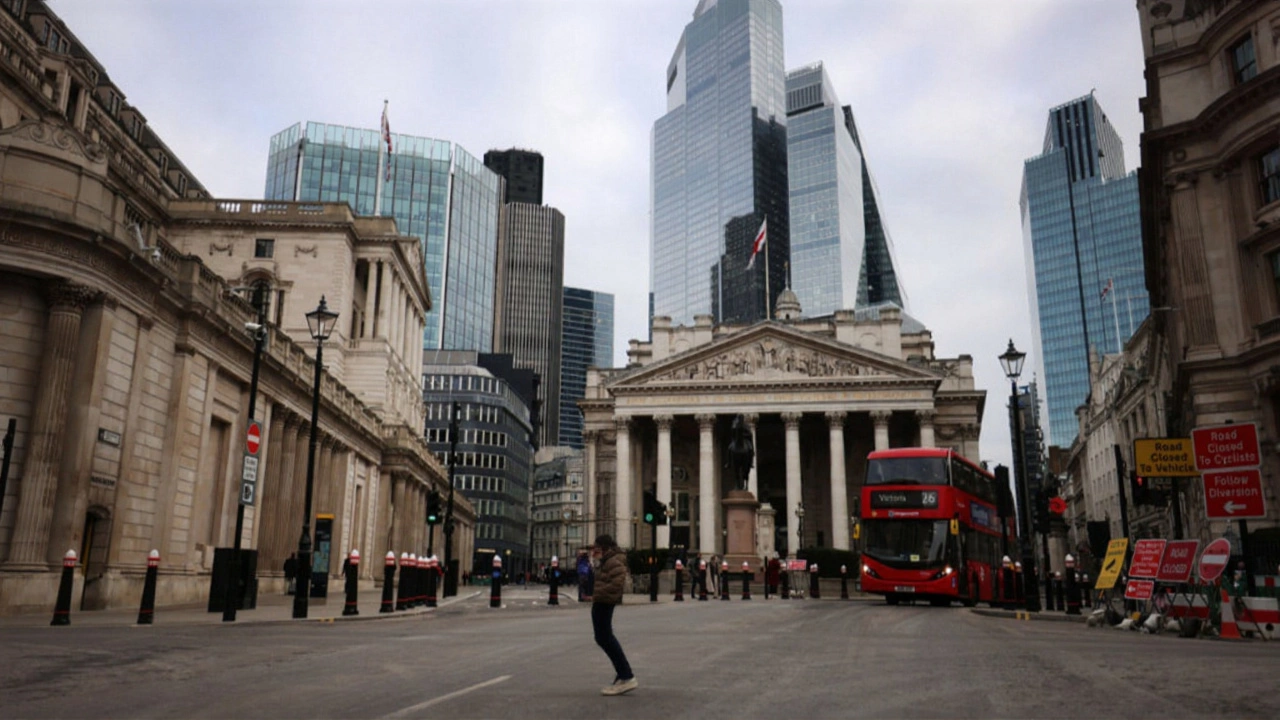
The Bank of England kept its key interest rate at 4% on November 6, 2025, sending a clear message: inflation isn’t beaten yet. Despite five consecutive cuts since August 2024, the Bank Rate remains nearly double the central bank’s 2% target. At its meeting in the historic Threadneedle Street headquarters in London, the Monetary Policy Committee, led by Andrew Bailey, chose caution over comfort. The decision stunned no one—but it didn’t reassure anyone either.
Why Hold When Inflation Is Falling?
Here’s the thing: inflation is falling. From a peak of 11.1% in October 2022, it’s now officially 3.6% according to the Bank’s own November 6 update. But the Consumer Prices Index for September showed 3.8%—a tiny gap, but one that’s enough to make policymakers nervous. Why? Because wage growth is still too hot. At 4.4% year-over-year, pay increases are far outpacing the 2% target. That’s not a bug—it’s a feature of a stubbornly overheated labor market. When workers earn more, they spend more. When they spend more, companies raise prices. And that’s the cycle the Bank of England is trying to break.“We’ve come a long way,” said Andrew Bailey, 60, in his calm, measured tone. “But inflation remains too high. We’re balancing the risk that it sticks around against the risk that we cut too fast and crash demand.” It’s a tightrope walk. Cut too soon, and you risk reigniting inflation. Cut too late, and you strangle growth.
The Numbers That Matter
- Bank Rate: 4% (unchanged since August 2025, fifth cut since 5.25% peak in August 2024)
- Official inflation (October 2025): 3.6%
- September CPI: 3.8%
- Wage growth (September 2025): 4.4% (down from 5% in August)
- Duration above target: 19 consecutive months since February 2024
- Households with variable-rate mortgages: 28.3 million
- Businesses with floating-rate loans: 1.2 million
- Savers with UK deposits: 32.7 million
Those numbers aren’t just stats—they’re lives. A family in Manchester with a £250,000 mortgage at 4% is paying £1,180 a month. Drop the rate to 3.75%, and they save £35. It’s not life-changing—but it’s the difference between a new pair of shoes and another month of stretching the grocery budget.
What Markets Are Betting On
The market didn’t react with panic. It reacted with relief. The FTSE 100 climbed 0.78% to 8,342.15. The pound strengthened to $1.2847. Why? Because investors heard what they wanted: cuts are coming. The Bank of England didn’t say “we’ll cut in December,” but it didn’t need to. The Monetary Policy Committee’s minutes and Andrew Bailey’s tone left no doubt.Analysts at PensionCraft, in a widely watched YouTube breakdown, noted that markets now price in two cuts before summer 2026. The first? Likely to 3.75% at the December 18-19 meeting. The second? Possibly in February 2026. “It’s very close to bank rate just a tiny bit less,” said the presenter, referencing the minutes. “That’s likely to stay 4%ish.”

The Human Cost of Holding Steady
For savers, this is brutal. A typical £20,000 savings account earns just £800 a year at 4%. At 2%, it’s £400. That’s not just lost interest—it’s lost opportunity. Retirees living off fixed incomes are watching their purchasing power erode. Meanwhile, small business owners in Birmingham or Bristol are still paying 5.5% on overdrafts. They can’t expand. They can’t hire. They’re just trying to survive.And then there’s the government. With public debt at 98% of GDP, every 0.25% rise in borrowing costs adds £5 billion to the annual bill. The Bank of England’s job isn’t to help the Treasury—it’s to control inflation. But the two are inextricably linked.
What’s Next? The December Crossroads
The next meeting—December 18-19—is the real test. Will the Bank finally move? Most economists say yes. The Bank’s own projections show inflation falling to 2.8% by Q2 2026, and 2.1% by year-end. That’s close enough to justify a cut. But here’s the twist: the Bank might wait. Why? Because the labor market is still tight. Because services inflation—driven by haircuts, gym memberships, and restaurant bills—isn’t budging. Because they don’t want to be the central bank that cut too soon… again.Remember 2022? The Bank waited too long. Then it had to hike aggressively. Now, they’re terrified of repeating history. So even if the data says “cut,” they might say “wait.” That’s the psychology of central banking: fear of being wrong outweighs the fear of doing nothing.

Why This Matters to You
If you have a mortgage, you’re watching every meeting. If you’re saving, you’re frustrated. If you’re a small business owner, you’re calculating whether to delay hiring. This isn’t abstract. It’s Tuesday morning. It’s the grocery bill. It’s the decision to fix the car or pay the heating bill. The Bank of England isn’t just setting rates—it’s shaping daily life for 67 million people.Frequently Asked Questions
Why hasn’t the Bank of England cut rates yet if inflation is falling?
Even though inflation has dropped from 11% to 3.6%, it’s still well above the 2% target. Wage growth at 4.4% and persistent services inflation suggest price pressures could return if demand rebounds too quickly. The Bank is wary of repeating the mistakes of 2022, when it waited too long to hike, forcing aggressive increases later.
When is the next rate cut expected?
Markets now price in a 3.75% cut at the December 18-19, 2025 meeting, followed by another possibly in February 2026. The Bank hasn’t confirmed this, but its language and minutes strongly suggest gradual cuts starting in late 2025, with pace dependent on inflation and wage data through Q1 2026.
How does this affect mortgage holders?
Approximately 28.3 million UK households have variable-rate mortgages. A 0.25% cut on a £250,000 mortgage saves about £35 a month—small, but meaningful for families stretched thin. Many are still paying rates above 5%, and even a single cut could free up hundreds of pounds annually for essentials.
Why is wage growth still so high?
Despite a slight dip from 5% to 4.4%, wage growth remains elevated due to labor shortages in healthcare, hospitality, and transport. Employers are still competing for workers, pushing up pay. Until productivity rises or immigration eases pressure, wages are likely to stay above the 2% inflation target, keeping inflation risks alive.
What role does the Pound play in this?
A stronger pound (currently £1 = $1.2847) helps import cheaper goods, which can ease inflation. But it hurts exporters—UK manufacturers and farmers face tougher competition abroad. The Bank monitors currency moves closely, but doesn’t target exchange rates directly. Still, a stronger pound gives them a little breathing room.
Is the Bank of England behind the curve?
Some economists argue yes—especially compared to the U.S. Federal Reserve, which has signaled earlier cuts. But the UK’s inflation was worse, and its economy is more reliant on consumer spending. The Bank’s cautious approach reflects its belief that the UK is more vulnerable to a sudden downturn. It’s not behind—it’s just playing a different game.